Some well meaning folks, when I was still on Facebook, said my posts were too long, people wouldn’t read them. Well, I write them as much if not more for myself than my “audience”. And the origination of the ones I am finally sharing here was that they were kind of intended as a book. Not necessarily for the purpose of publishing one. Just had the urge to say all these things and get them down on paper. So I apologize if some of them are quite lengthy. I give each section the room it needs, deserves, and takes. I hope they have been of interest and value to you.
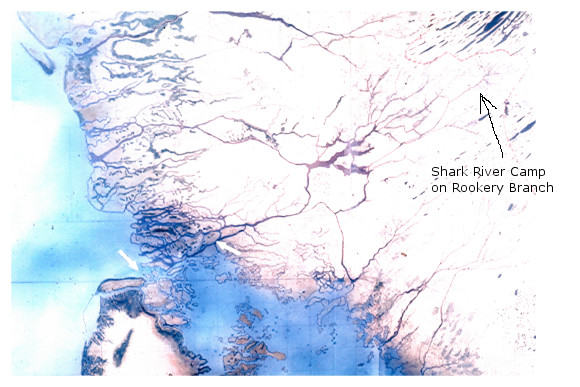
Our main research station was Cottonmouth Camp, already featured and illustrated in the African Queen episode. It was right in the heart of the River of Grass, halfway down to Florida Bay from the northern boundary of the park, The Tamiami Trail. The Trail itself was a historic accomplishment, taking from 1915 to 1928 to complete. Given what Fred and I went through in building the Shark River Station, we got a small taste of what they must have dealt with.
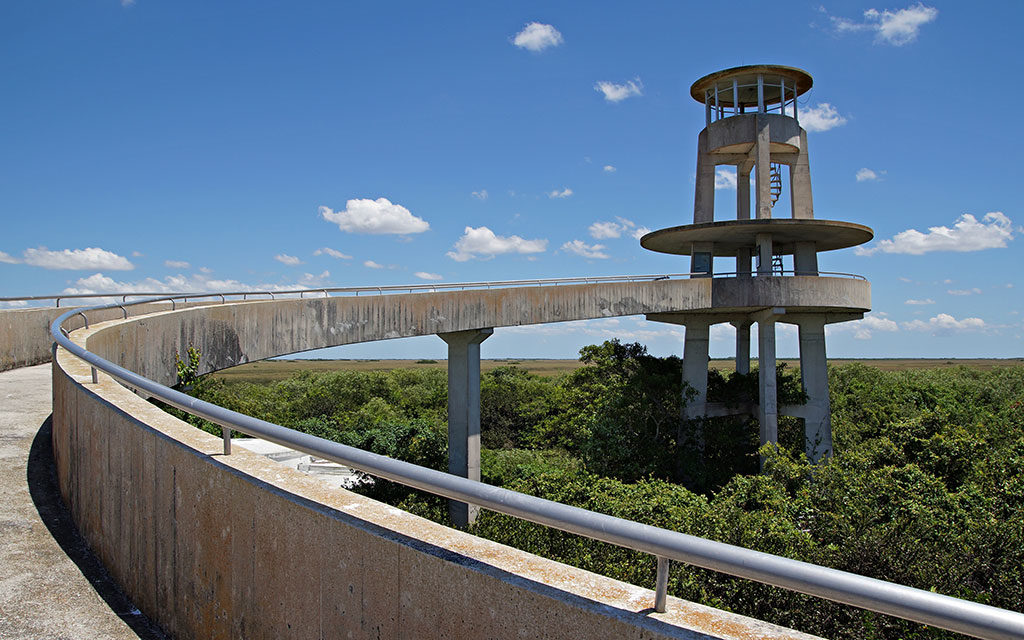
Near the 40-mile bend on the Trail was a fire observation tower, The Shark Observation Tower, open to the public. A loop road went south to it, the first leg a straight-line due south to the tower; the return leg snaking its way through the sawgrass plain back to the Trail. This is where we would take off in the airboats to get to Cottonmouth Camp.
You can imagine that whipping along through the sawgrass we became covered with a complete sampling of the animal life, mostly of the creepy-crawly kind. NOT a job for arachnophobes! We did occasionally flush into the air some of the avian life. When you did it was quite natural for your eyes to follow it up into the air as it flew over your heads. One time we flushed a Least Bittern, and when we looked back down at each other, well, Aaron received a face full. Horrible people that we were, Fred and I laughed our heads off!
Murph and Aaron decided we needed to extend our studies as naturalists to the ecology of the transition from the fresh water open pond/ tree island river of grass into the brackish mangrove estuaries to the southwest. Fred Hoover and I were elected to build the Shark River Camp. This led to one of the my most awe-inspiring experiences of the beauty of our natural world, the wonder of it staying with me to this very day, the Rookeries in that transition zone.

But first, building the camp. We would put in our 12-foot motorboat in Flamingo, the southwestern terminus of the main road into the Park, on Florida Bay, and head North. Eventually we would come to the well-defined channel of the Shark River. To protect the glades and the rookeries there was this 3-inch-thick pipe padlocked the entire width of the river on two poles pushed well down into the peat below. Unlocking it, swinging it wide for the boat to go through, then putting it back and relocking it was quite an operation.
The first time I was there we experienced an overpowering but beautiful smell. I had Fred pull the boat over to the side of the channel into the mangroves. My mother had raised orchids while I was growing up. Of course she enlisted my brother and I in caring for them. So I knew orchids well. Vanilla orchids. Wild vanilla orchids, stretching for miles along the banks, climbing up the mangroves for the surface of the water to the tops of the trees, their vines practically smothering them. Just one of the many experiences of the wonder of nature I had been privileged to enjoy and keep with me for the rest of my life.
(to be continued)