I have been traveling the rural roads of Georgia for 40 years. I used to make two week long East Coast trips when I did the stamp shows in New York City and saw clients all up and down the East Coast. Over the years I have so much enjoyed getting off the Interstate and driving the two-lane county, state and US highways in the countryside. It always brings an involuntary smile to my face the minute I leave the Big Roads!!
Since 2008 I have been the financial advisor to the Georgia Firefighters Burn Foundation in Atlanta. For over 30 years fire departments in Georgia have done their boot drives in May. They donate the money to the foundation, which runs safety campaigns, buys equipment for poor counties but primarily helps burned children recover.
I was asked to give a talk to the burn community in Atlanta yesterday. That community consists of the fire departments but also the emergency medical services and the doctors, nurses and social workers associated with the burn centers. The executive director Dennis Gardin and the executive administrator Venessa Walker and I had met February 16th and had a brainstorming session to come up with ways to move forward by increasing the fundraising for the future. I was asked to share those ideas at the annual Firefighters Appreciation Day.
So 30 miles north of Tallahassee I head west of Thomasville and continue north past Coolidge, Moultrie, through Sylvester and 2 1/2 hours later in my 5 hour drive I intersect with I-75 and continue on to Atlanta.
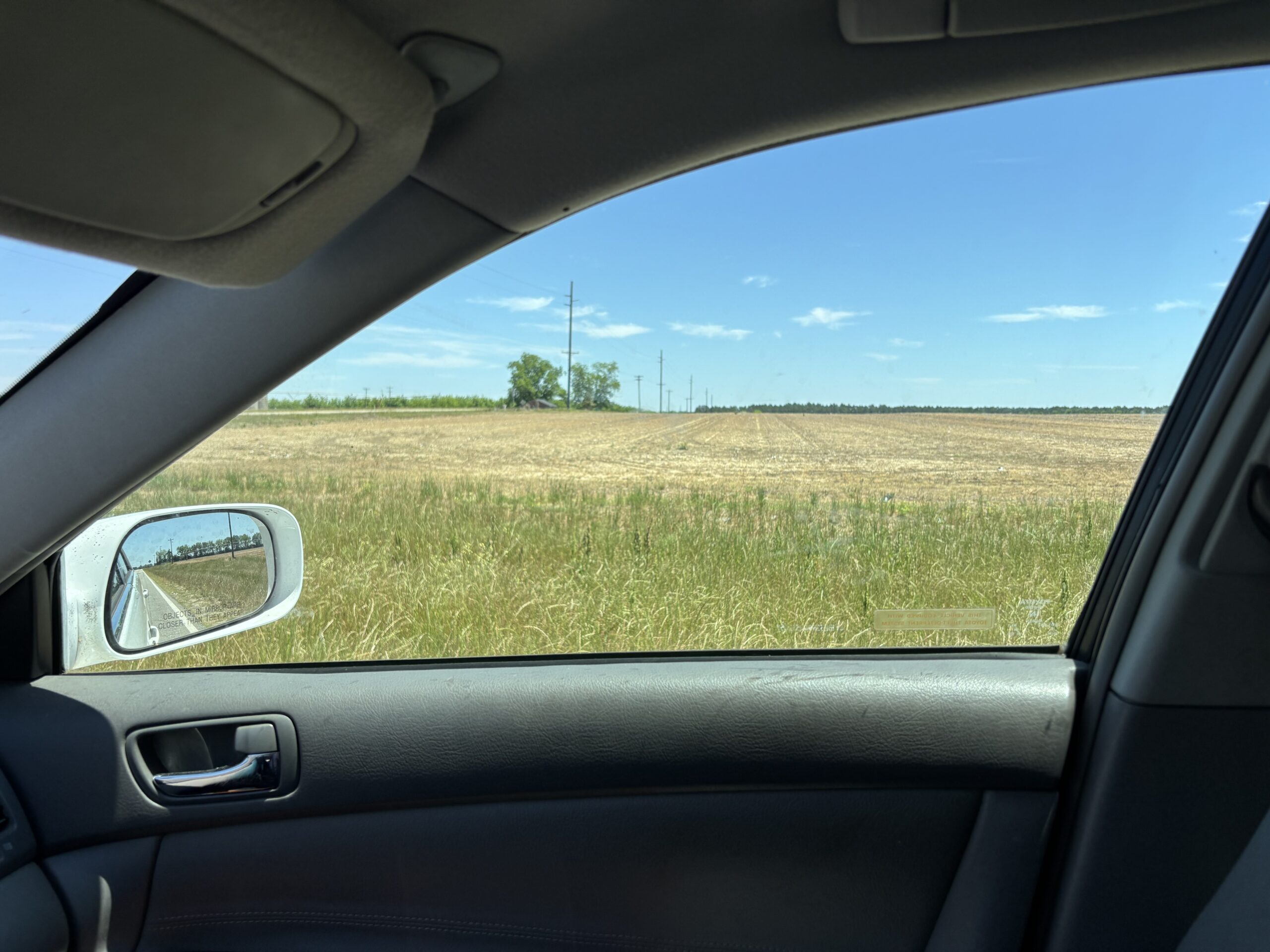
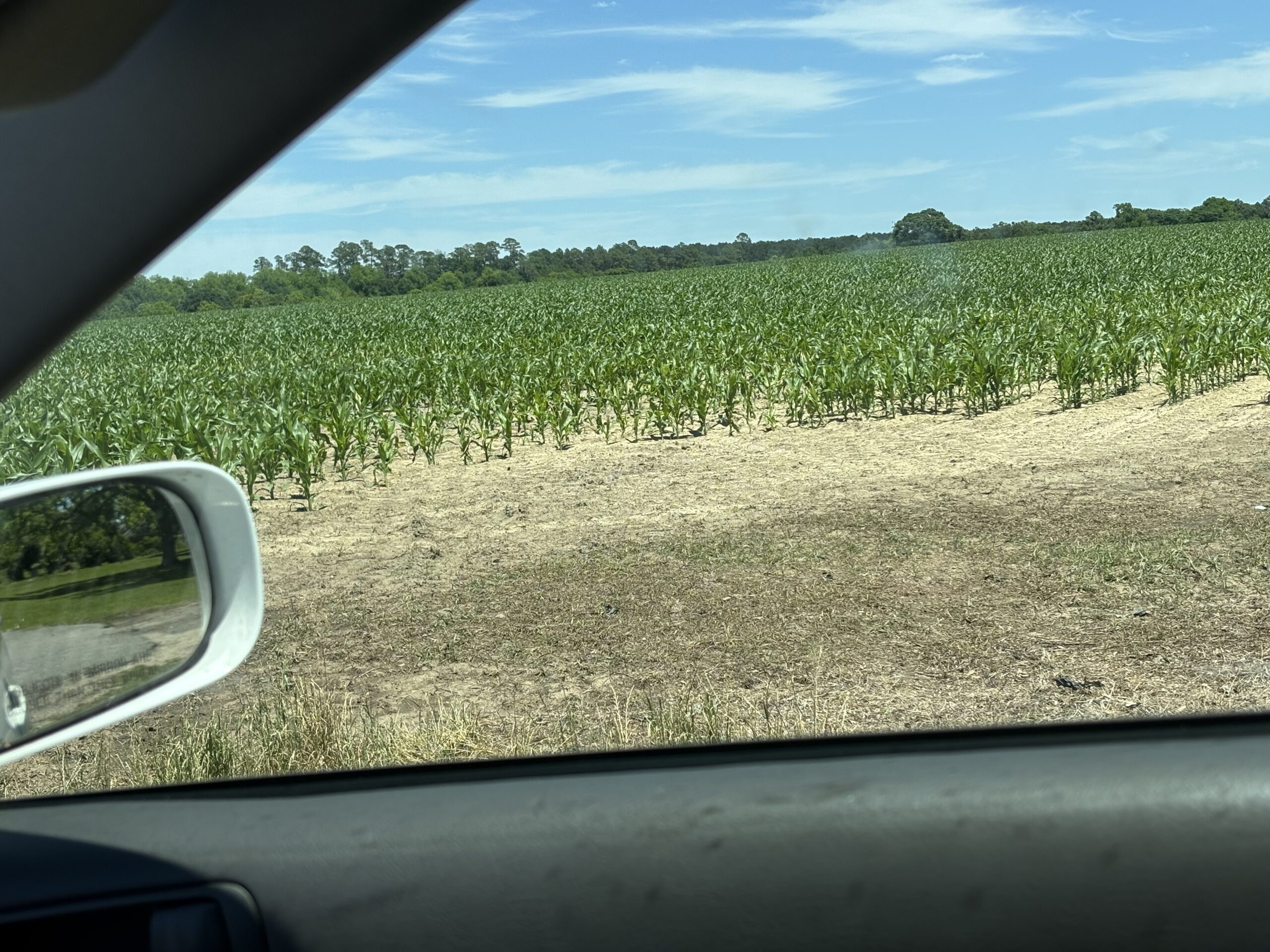
I was barely a few miles north of Thomasville when I almost stopped dead. The last freezes occur in Georgia typically in February. After the harvest in the fall given the moderate winters in the South the fields are covered with a scrubby weed cover which the farmers plow in February in preparation of the March planting. By May all the fields are planted in peanuts, soybeans, cotton and corn along with some truck farms with vegetables. By may the corn is between 1 and 2 feet high.
What brought me to almost stopped? A plowed field on my right that had not been planted. And then the next one on my left. And every single field I was passing had not been planted. I know it wasn’t in a time warp but I had never in the 40 years I’ve traveled rural Georgia ever seen that before. By the time I got near Coolidge I pulled over and once the US Department of Agriculture website to look at the reports on Georgia agriculture.
For a very long time now the US Department of Agriculture surveys planting and the production of farmland in the US in order to project the harvest and crop yields and possible price trends based upon the supply expected. Their survey indicated that 70% of the farmers in Georgia had not planted their fields because they expected to not be able to afford to pay for the fertilizer. Urea, one of the most important fertilizers had gone up over 40% since the beginning of the war which started when farmers would have planted. A few farmers were planting expecting lower yields but better than nothing. Some farmers were going to plant crops that needed less fertilizer then corn. But my observation was much, much worse than that report.
On the way back from Atlanta after filling my car and Sylvester I got curious and proceeded to count the number of unplanted fields. Some of these fields are fairly modest in size but some of these fields are so large they’ll stretch for as much as a mile along the road and the tree line is barely visible in the distance. The counted 28 unplanted fields before I saw a field planted in corn. It was barely 1 foot high instead of its usual 18 inches. I got curious how many miles it had been since I filled the car up which was easy because I always reset one of the odometer counters to 0 when I fill up the car. It was 8 miles.
And at that point I pulled over and checked out the American Farm Bureau and their site indicated that their survey indicated 78% of the farmers in the entire country had either reduced or not planted their fields print not just Georgia. I stopped counting because I felt I had enough statistics for this post until I noticed another planted field. Realizing it had been a while since I had passed that first planted field I’d lasted the odometer. I had just gone past another 10 miles of unplanted fields.
I’ll leave you all to guess the implication for our food supply, fuel supply (ethanol from corn) and economic activity. Reports have indicated that farmers have been losing money for the past few years so I predict we will have a record loss of family farms by next year. Trump strikes again!